
Root Canal Therapy
January 10, 2026
Root canals are necessary when the pulp layer of a tooth becomes infected. Infection can lead to the loss of a tooth so it is necessary to remove the infection with root canal therapy. The procedure is generally comfortable and saves the natural tooth, prevents the spread of infection, and returns the smile to complete health.
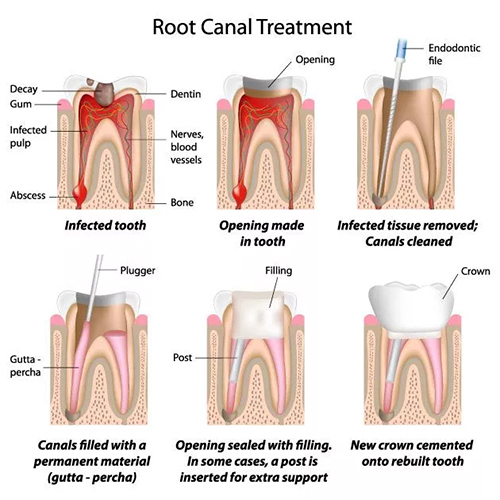
The Procedure
Before the procedure begins, the area is completely numbed using a local anesthetic. Once the area is numbed, a rubber dam is placed around the infected tooth to protect the mouth and to prevent anything from falling into the back of the throat.
In order to access the infected tooth pulp, an opening is made through the top of the tooth to get down into the pulp chamber. A tiny instrument, called a dental file, is then carefully used to clean out the infected tissue and to shape the root canals to receive a filling. X-rays may be done to ensure that all of the infected pulp is removed before the filling is placed.
After the infected pulp is removed, the restoration is placed. In most cases a crown is placed to protect and strengthen the tooth. However, if the tooth is severely broken down, it may be necessary to start by building up the tooth with a post and core.
Frequently Asked Questions
How did my tooth become infected?
There are two common causes of infection: cavities and fractured/broken teeth. Both expose the pulp area to bacteria that live in saliva. These bacteria can cause an infection that can kill the pulp.
Do I really need treatment?
Without treatment, pus from the infected tooth can spread to the root tip and eventually pass to the jaw bone. This can cause an abcess (a pus pocket) that can damage the bone that surrounds the tooth. The pressure this causes can cause excruciating pain and, left untreated, can be life threatening. An infected tooth can not heal on its own and will only get worse.
What are the symptoms?
Symptoms tend to vary from patient to patient. Infected teeth may be sensitive to hot or cold, the area may be swollen or painful, or there may be a bad taste in the mouth. Occassionally there will be no symptoms at all.
Affordable Care
At Adriatic Dental, we believe exceptional dental care should feel comfortable, stress-free, and accessible for every patient. From routine cleanings to complete smile transformations, our friendly team is committed to providing personalized care that fits your unique needs, goals, and budget.